
 Proton

The key point
This supports investigating the modification, without a complete circuit diagram or long-term test.
- Vehicle / subject
- Proton Persona VVT
- Record type
- A case from Sifu White’s workshop
- Original video
- 2026-06-24
Sifu White explains what happened
Prices, repair times and warranty terms mentioned in the video applied at the time. Ask the workshop about current arrangements.
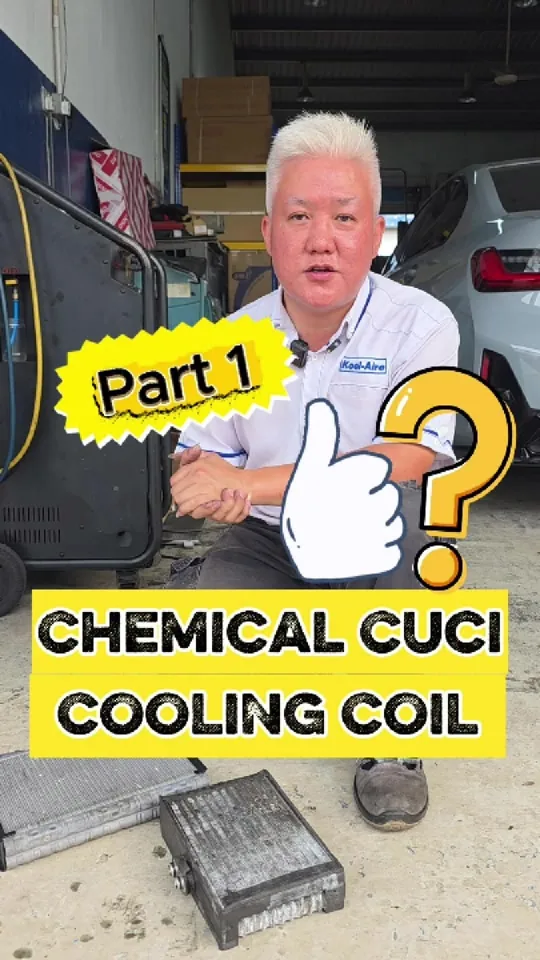
This is a Proton Persona VVT. The original complaint was that the air-conditioning would cool at times but become warm after certain driving conditions. When the car first arrived, the cooling coil was extremely dirty and appeared slimy. Work was carried out on the cooling coil, sensor and expansion valve, followed by system flushing. After the car was returned, the customer reported that the same problem remained.
The customer returned and we checked the car again. The compressor clutch appeared burned or stuck and would not release, so that component was replaced. Another unusual issue remained: the compressor still would not cut off. Even after disconnecting the wire to the air-conditioning switch, the compressor continued running.
Normally, the compressor should cut off when the air-conditioning switch is disconnected. Sifu White then disconnected the climate-control wiring, which allowed the compressor to release. We suspected the climate-control unit, replaced it and tested the car. Two days later, however, the customer said that the same problem had returned and questioned the repair.
We asked the customer to return the car for inspection. Sifu White road-tested it to Gombak and other locations for two or three hours, but the problem did not appear. The customer repeatedly complained that the air-conditioning iced up in the morning and then produced water. Sifu White therefore went to the customer's home to collect the vehicle and test it under the actual conditions.
While driving, Sifu White noticed something highly unusual: the fan and compressor ran together continuously without stopping. We eventually found that an aftermarket LED light had been installed. Once the LED or its connection was removed, the system's behaviour changed.
When the air-conditioning is switched on, the compressor begins to run. Previously, the system could become excessively cold and form ice because the compressor did not cut off as intended. We removed and tested relays, including the blower relay, and observed that the system could cut off automatically. When the modified LED light was reconnected, the interference could be observed again.
Separate component failure from power and control faults
Pressing A/C is a request; the vehicle still has to meet its operating conditions. Controllers, sensors, relays and wiring work together to determine whether a component runs. A compressor that does not start may have an internal fault, or it may not be receiving the required power or command. Before replacement, the technician needs to establish where the failure occurs in the actual circuit rather than treating the visible symptom as the diagnosis.
A fault code helps direct testing, but it does not always identify a part to buy. Actual output, connectors, ground connections and circuit behaviour under load may all need verification. Added relays or bypass wires can also change the original control relationships. After addressing an electrical fault, the air-conditioning needs to be operated again to check the original complaint. A cleared code or newly installed part is not sufficient evidence of a successful repair by itself.
Why airflow can fade during a long drive
The evaporator is the component commonly called the cooling coil. Air is cooled as it passes over it. If ice builds up on its surface, the air passage can become progressively restricted. The owner may notice strong cooling initially, then less and less air during a longer drive. That sequence is different from air continuing to blow strongly but becoming warm, and the distinction helps the technician choose relevant tests.
Temperature feedback, anti-icing control, refrigerant condition, metering and airflow can all be relevant; ice alone does not prove a sensor has failed. A problem that develops after a long run may not appear during a short idle test. Record how long it takes, the temperature and fan settings, and whether airflow returns after the system has been off for a while. Verification should cover those trigger conditions without treating unsafe driving as a diagnostic requirement.
What to tell the workshop about your own car
You do not need to guess a part name first. A clear description of what actually happens is often more useful for reproducing the complaint than requesting a particular replacement.
- Mention previous wiring changes, added relays or controller replacements.
- Record when airflow fades and whether stopping or switching A/C off changes it.
- Include the model, year, recent repairs and what changed before or after the symptom began.
Questions owners ask
Can a fault code be used as a replacement instruction?
Use the code together with circuit and component tests. Wiring, ground faults or unmet control conditions can prevent an otherwise serviceable component from operating.
Does fading airflow mean low refrigerant?
Not from airflow alone. A restricted filter, blower problem or evaporator icing can affect air delivery. Separate a change in airflow from a change in temperature.
Original video and further reading
Original video by Sifu White, recorded on 2026-06-24.

 Perodua