
 Mercedes-Benz

The key point
In this Mercedes W204, testing found no power output from the SAM module to the compressor, while the connecting wiring remained intact. Trying another SAM module restored system operation. This supported investigating the power-supply fault rather than condemning the compressor solely because it would not start.
- Vehicle
- Mercedes-Benz W204
- Owner’s complaint
- A/C not cold; compressor will not start
- Key finding
- Wiring intact, but no SAM output
- Recorded result
- Operation restored during a substitute-module test
What brought this W204 to the workshop?
The owner reported that the air-conditioning was not cold and asked for the wiring to be checked. The vehicle had already been inspected elsewhere without resolving the complaint. The immediate question was therefore what was preventing operation and what evidence would justify the next repair.
For the driver, the problem was a warm cabin. For the technician, it became a more specific observation: the compressor would not start. The investigation needed to separate a component that could not work from one that was not receiving the power or control it required.
How did Sifu White narrow down the fault?
The following follows the sequence described in the original recording. Each step distinguishes the finding from what it actually establishes.
Read the fault information and inspect the outside-temperature sensor wiring
Computer diagnosis identified a fault relating to the outside-temperature sensor. Inspection near the bumper found broken wiring, with Sifu suggesting that a bracket may have rubbed against it over time. The physical inspection connected the diagnostic clue with an actual wiring problem.
That was a fault worth addressing, but it did not establish that every reason for the warm cabin had been found. The compressor still needed to be checked afterwards.
Check compressor power again after addressing that first fault
The recording states that the compressor still would not start after the sensor-wiring issue was addressed: it had no power. This is the turning point in the case. Finding one damaged circuit did not finish the original investigation.
Rechecking the owner’s complaint matters because a repaired wire and restored cooling are different outcomes. Without that check, the car could leave with work completed but the principal symptom unchanged.
Separate missing module output from a broken connection
Testing continued at the SAM module. Sifu reports that it was not supplying power to the compressor, while the wiring between the module and compressor was not broken. Wiring joints on older cars were discussed as potential trouble spots, but continuity still had to be established on this vehicle.
No power leaving a module is a different finding from power leaving it and being lost along a damaged wire. Checking both sides narrowed the problem and gave a reason for the next test.
Try another SAM module and observe the response
A used donor SAM module was fitted for comparison, and the system operated again. That change provided additional support for the missing-output finding and linked the symptom, test and result.
This documents a comparison test. It does not establish that every W204 should receive a used module, that every replacement is compatible, or which module was ultimately supplied at handover. Actual parts and vehicle requirements still need confirmation.
Why a compressor that will not start is not necessarily a failed compressor
The principle: separate the compressor’s function from the power and control needed to operate it.
The compressor compresses and circulates refrigerant so the system can transfer heat out of the cabin. A lack of operation can come from an internal fault, but also from the supply or command on which the component depends.
A lamp that does not light offers a simple comparison: the bulb may have failed, or the switch may not be supplying power. Observing darkness alone does not tell you which to replace. Vehicle A/C controls are more complex, but the distinction between component failure and missing supply remains useful.
- Operating conditionsIs the system permitted to run?
- Module and wiringDoes the required output reach the component?
- Component testingWhich finding supports the repair?
In this case, missing compressor power was an actual finding. Sifu also explains that the climate-control panel was not the fault identified here. A warm cabin did not justify jumping straight to either a compressor or a control-panel replacement.
The outside-temperature sensor supplies information about the temperature outside the vehicle. Its wiring issue was real, but addressing it did not remove the main symptom. A car can have more than one problem, so each intervention needs to be followed by verification.
The terms used in this case
- Compressor
- A key part of the refrigeration circuit. “Not starting” describes its state, not the cause by itself.
- SAM module
- The vehicle electrical module involved in this case’s output test.
- Outside-temperature sensor
- Provides outside-air temperature information; damaged wiring was found nearby.
- Climate control
- The driver’s air-conditioning controls. No cooling does not by itself prove the panel is faulty.
How far does the recorded result go?
The record supports this sequence: address the sensor-wiring issue, establish that SAM output is missing despite intact wiring, then restore operation during a substitute-module test. It shows why diagnosis continued after the first fault was found.
There is no final invoice, confirmed handover module specification or long-term follow-up in the supplied material. This explains the diagnosis; it is not a fixed quotation, warranty commitment or buying guide for a used SAM module.
What should you tell the workshop if your Mercedes has similar symptoms?
You do not need to decide whether it is the SAM, wiring or compressor before contacting the workshop. Describe the symptom and previous work, particularly what changed after an earlier inspection or repair.
- Provide the model and year, plus engine or variant information if known.
- Explain whether cooling is completely absent or intermittent, and whether idling, driving or a warm engine changes it.
- Separate weak airflow from normal airflow that is not cold; you do not need to inspect the compressor yourself.
- Bring diagnostic reports, quotations or repair records and explain whether the original symptom changed.
Ask what the power tests showed, how the wiring and module were assessed separately, and what supports the proposed replacement. Circuit and module testing should be performed by technicians familiar with that vehicle’s system.
Questions owners ask
Does warm A/C on a W204 always mean a bad SAM module?
No. In this car, missing output and intact wiring were established before another module was tried. Similar symptoms on another W204 can have different causes.
Why did fixing the sensor wiring not restore cooling?
The recording states that compressor power was still absent afterwards. The investigation therefore continued to the SAM output, illustrating that the first fault found may not be the only one.
Would a regas fix a compressor with no power?
Adding refrigerant would not repair the module-output fault identified in this case. Refrigerant and electrical checks address different issues and should follow the actual findings.
Can I buy a used SAM module and fit it directly?
The video documents a donor-module test, not every compatibility condition or the final handover arrangement. Confirm the fault and the vehicle’s parts requirements before purchasing.
Does the same diagnosis apply to W203 and W212 models?
Sifu describes similarities in diagnostic reasoning, not a guarantee that the same component fails. Wiring, configuration and test results still need to be established for each vehicle.
How much does this repair cost and how long does it take?
The source does not provide a transferable price or labour time. The fault location, diagnostic scope, parts choice and availability determine the quotation and schedule.
Original video and further reading
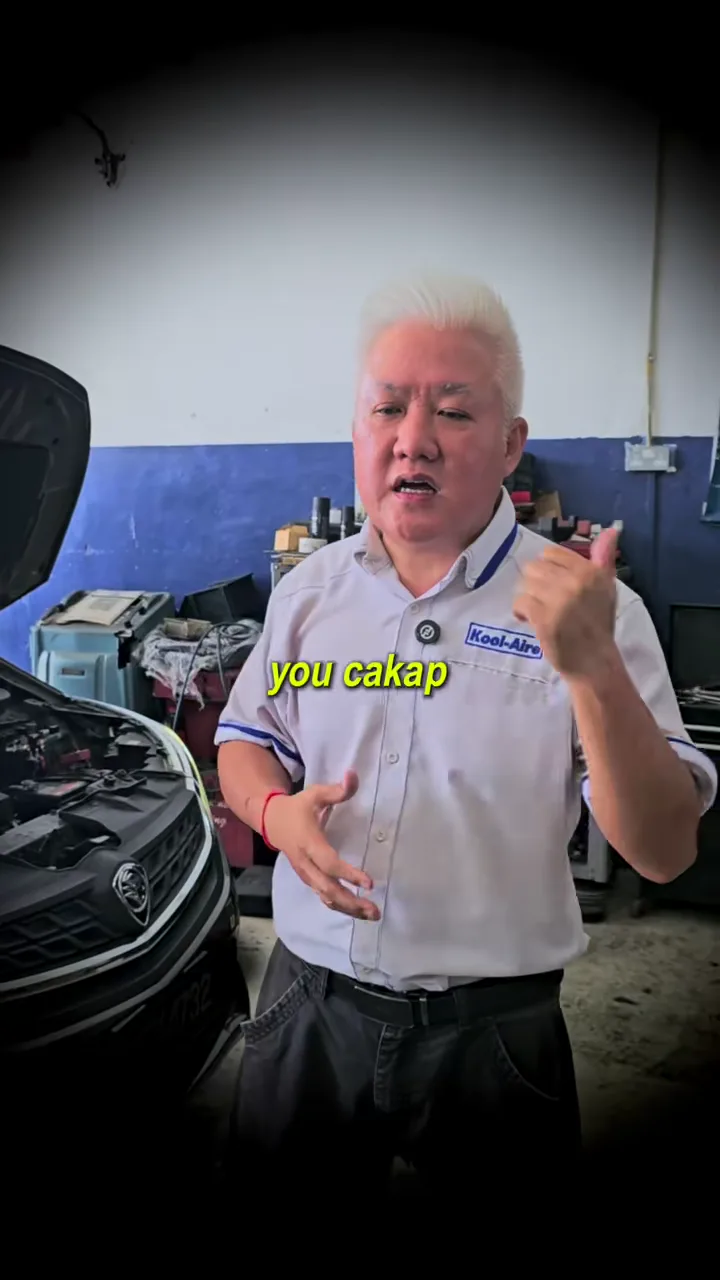
Based on Sifu White’s W204 video dated 8 July 2026 and its trilingual reference transcript. The diagnostic sequence is described at 00:24-01:18, followed by comments on the control panel and other Mercedes models at 01:18-01:43. The principle section adds an owner-friendly explanation of that sequence.
 Proton